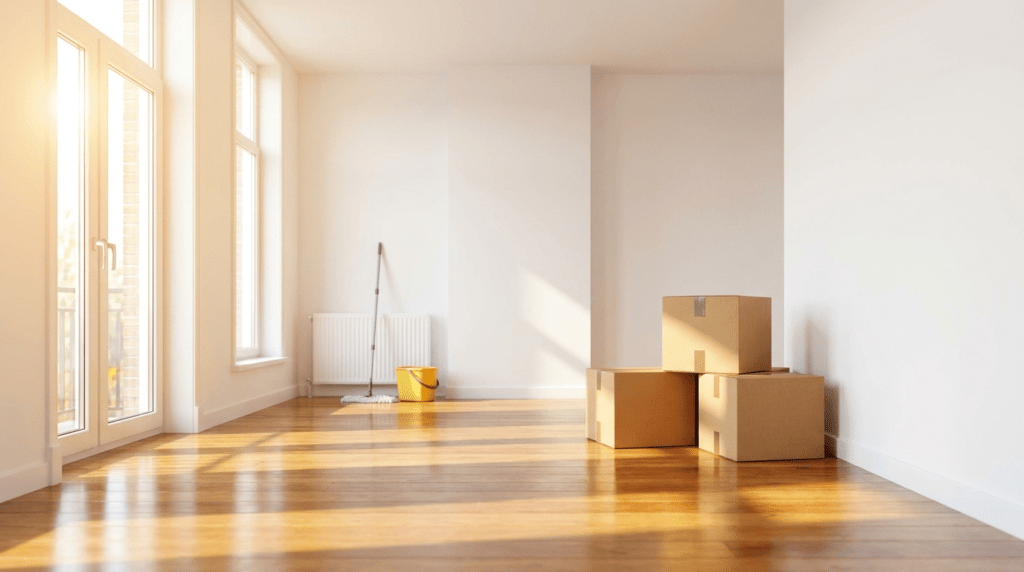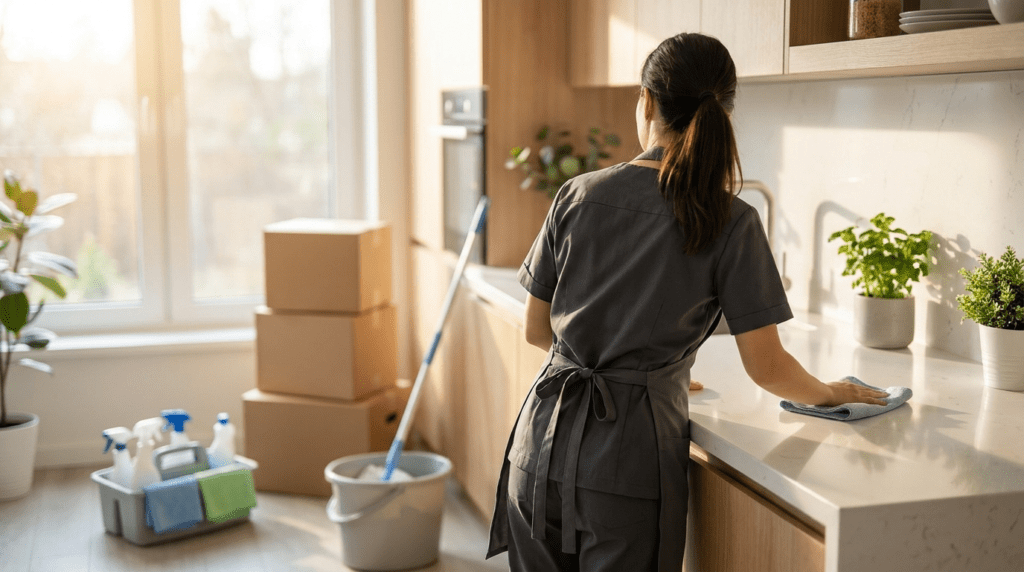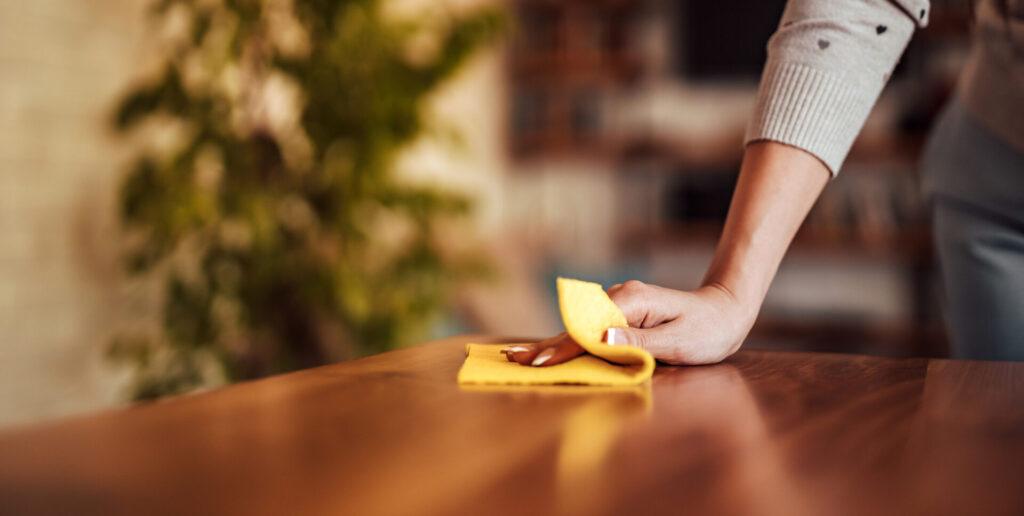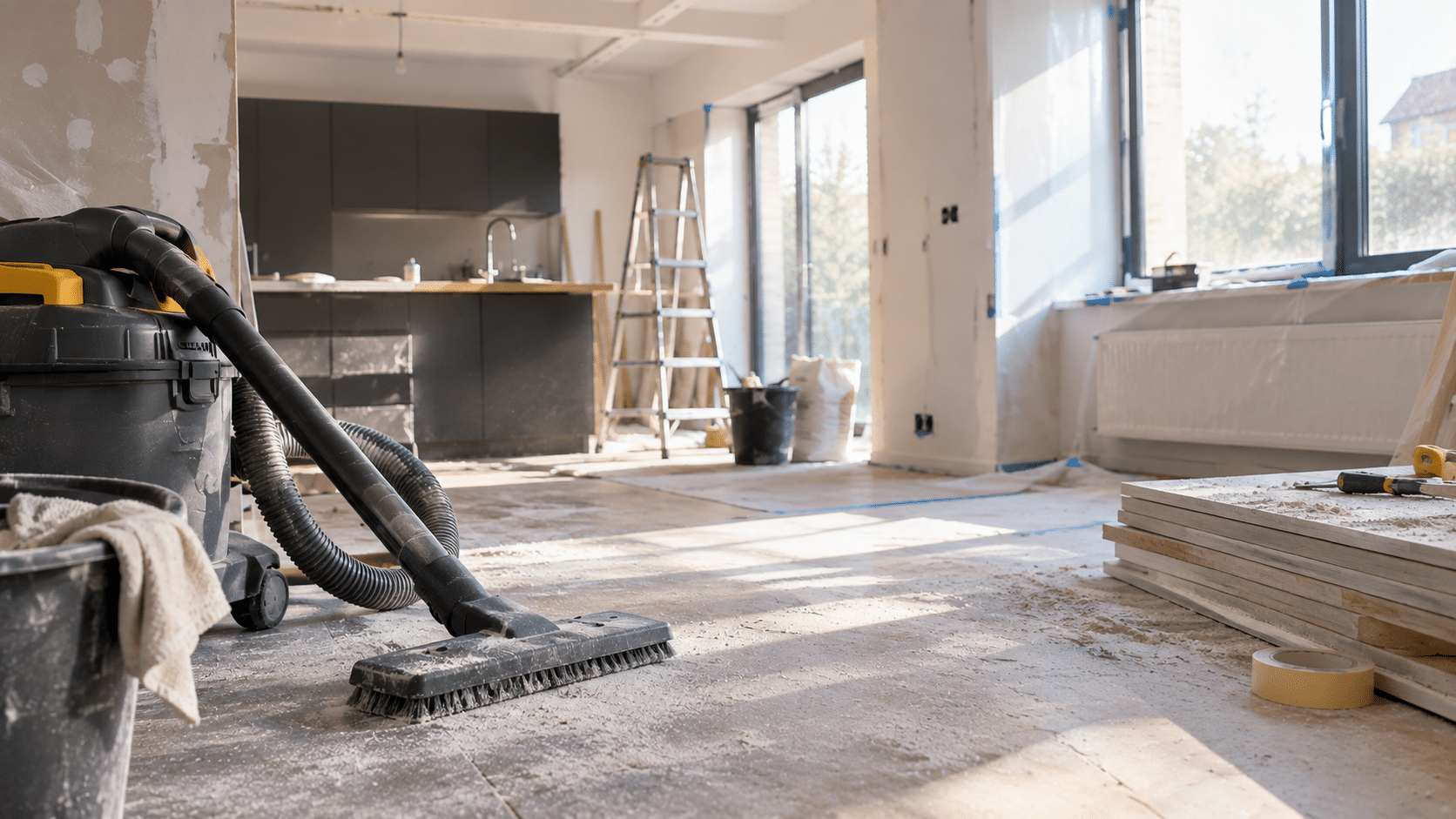
You’ll rarely get rid of renovation dust in one go. The finest dust from sanding and plastering hangs in the air for hours, then settles again on everything you’ve just cleaned. Plan it in three rounds: clear the rubble, vacuum dry, then wipe with a damp cloth. Work from top to bottom, and give the dust time to settle in between.
The builders have gone and the new bathroom looks great. You wipe everything down, and by the next morning there’s a fine grey film on the windowsills again. That’s normal, and it’s not a sign you cleaned badly. Here’s why renovation dust behaves the way it does, and the order that actually works.
Why the dust keeps coming back
Plaster, cement and sanding dust are much finer than ordinary household dust. After the work stops, they often stay airborne for hours and only settle once the air is still. By then, they’ve landed on every surface in the room.
The dust also collects where you don’t look: on top of cupboards, inside drawers, between the fins of your radiator. Every time you walk through or open a door, some of it lifts again.
So the first clean often feels pointless. You’re removing the dust that has landed while more is still coming down.
Our honest advice: don’t start straight away, and don’t start wet
We wouldn’t book the big clean for the day the builders leave. Let the dust settle first. Leave it at least overnight, and after a lot of sanding, a day or two is better. In the meantime, just sweep the paths you walk on so you don’t carry dust into the rest of your home.
The second choice matters even more: don’t start with a bucket of soapy water. Water turns fine plaster dust into a grey paste. It smears across window frames, sinks into gaps and dries as a haze that’s harder to remove than the dust was.
Dry always comes before wet. Remove as much dust as you can while it’s dry. Only reach for a damp cloth when there’s very little left.
Your own vacuum isn’t built for this
A regular household vacuum struggles with fine construction dust. The filter clogs quickly and the suction drops. Whatever the filter can’t hold gets blown back into the room through the exhaust. Bits of rubble or dried cement can also damage the inside of the machine.
Vacuum specialists advise against it for that reason. A construction vacuum is the better choice, and you can often hire one for the day from a DIY store or tool hire shop. According to manufacturer Kärcher, a dust class L vacuum is suitable for plaster and lime dust.
If you have to use your own vacuum, don’t pick up rubble, use a soft brush attachment and clean the filter as you go. And don’t use a hairdryer or compressed air to shift the dust. That just puts it back in the air.
A three-round plan for after renovation cleaning
The order is what makes it work. In every round, go from top to bottom: ceiling and lights first, floor last.
| Round | When | What to do | What you need |
|---|---|---|---|
| 1. Clear the rubble | Right after the work | Remove rubble, masking tape and plastic sheeting. Sweep gently with a soft broom, without raising dust | Heavy-duty bin bags, soft broom, dustpan and brush |
| 2. Vacuum dry | After at least one night | Vacuum everything from top to bottom: lights, window frames, cupboards, radiators, skirting boards, floor | Construction vacuum with a soft brush |
| 3. Damp wipe | Straight after round 2 | Wipe all hard surfaces with a lightly damp microfibre cloth, then mop the floor | Microfibre cloths, two buckets, frequent clean water |
Expect to do one more wipe-down a few days later. Dust keeps working its way out of corners, cupboards and soft furnishings for a while. That’s part of the process.
One tip for round 3: wring your cloth out well. A wet cloth pushes the last bits of dust into gaps. A damp one picks them up.
The spots almost everyone misses
You won’t notice these straight away, but they’ll keep releasing dust if you skip them:
- The tops of kitchen cupboards, door frames and picture frames
- Inside drawers and cupboards, even if they were closed
- Ventilation grilles and the extractor hood
- The filter of your mechanical ventilation system
- Radiators, including between the fins
- Light fittings and lampshades
- Sockets and light switches (dry wipe only)
- Windowsills and the tracks of sliding windows and doors
- Curtains, cushions and your sofa
The ventilation is worth a closer look. Many Dutch homes have mechanical ventilation, a system that constantly pulls air out through grilles in the kitchen and bathroom. During a renovation, it draws in dust. If you rent, ask your landlord who replaces the filter; if you own, check it yourself.
A grey haze on new tiles
Is there a dull grey film on your new tiles after they’ve been grouted? That’s often grout haze: a thin layer of grout left on the surface. Ordinary soapy water usually won’t shift it.
Don’t attack it with a scouring pad. Ask your tiler which product suits your tiles, because some natural stone doesn’t cope well with acidic cleaners.
Rather not do three rounds yourself?
A renovation already takes plenty of time and energy. With construction cleaning from EasyClean, we clean every surface, wipe down skirting boards and radiators, clean the kitchen and bathroom, and mop the hard floors.
You pay per cleaner per hour. It’s hard to tell in advance how much dust a renovation leaves behind, so the time you book is an estimate. If your home needs longer, we’ll tell you before we carry on, and there are no hidden fees.
See what’s included in our construction cleaning, or book your clean online.
Moving in after the work is done? Read why a move-in clean before unpacking saves you effort. And for keeping on top of things afterwards, see how often you should deep clean your home, or our deep cleaning service.
FAQ
Can an air purifier help with renovation dust?
An air purifier with a HEPA filter removes some of the fine dust from the air. That means less of it settles on surfaces you’ve just cleaned. It doesn’t replace vacuuming and wiping, because it can’t pick up dust that has already landed.
How do I get plaster dust out of a sofa and curtains?
Vacuum the sofa and cushions with a soft brush attachment, ideally using a construction vacuum. Curtains are usually best washed or professionally cleaned, following the care label. Do this after your final cleaning round, or they’ll collect new dust.
Should I clean before the builders finish or after?
Mainly after. Cleaning while work is still going on mostly means cleaning twice. What does help during the work is sweeping walkways at the end of each day and keeping doors to other rooms closed.
How do I keep dust out of the rest of my home during a renovation?
Seal off the work area with plastic sheeting and tape, including around the door. Cover walkways with protective floor covering or cardboard, and move rugs and cushions out of the way. If you can, close the ventilation grilles in the work area and ask your contractor whether they use dust extraction.
How do I clean construction dust off a wooden floor?
Vacuum first with a soft brush so the grit doesn’t scratch the surface. Then mop with a well wrung-out mop and a cleaner that suits your floor finish. Untreated wood needs as little water as possible; if in doubt, check with your floor supplier.